
Anath At Le Poisson Rouge: Where Should We Express Ourselves?
September 16, 2011 at 11:02 am, by Jonah Rank
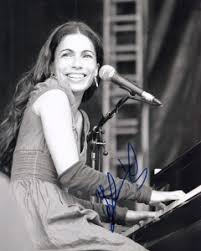 On May 9, I was excited to see Yael Naim in concert at Le Poisson Rouge.
I’m willing to bet that I entered the venue like most people who have heard of her: mostly familiar with “New Soul…”
And also her jazzy cover of Britney Spears‘ “Toxic.”
Those are Naim’s big hits: a bouncy piano-pop song and an ironic funny-bone-tickling cover song.
Unfortunately, I wouldn’t say that either “bouncy” or “funny-bone-tickling” really characterized the opening act: Anath.
Anath Benais, like Naim, is a French-Israeli singer/songwriter with an enchanting voice and an affinity for experimental sounds.
But Anath is way more low-key. Her band (also named Anath) is chiller than The Weepies. Anath’s songs are slow, and light percussion instruments substitute for the explosive drums that propels most pop music. The thrust of each song is Anath’s steady static singing that, together with tinkling keys, lays down a light melody on a bed of gentle chords from clean electric guitars or soft synthesizer sounds.
Anath’s music needs intimacy between the performer and the audience, and that’s why Le Poisson Rouge, which is a large underground club with an urban dance floor, was not the right venue for exhibiting the beauty of this music.
When it comes to art and certain emotions we choose to evoke, there are limits to the environments in which we can create these experiences.
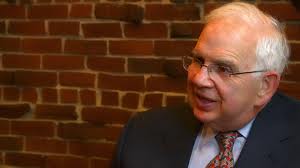 Rabbi Harold Kushner (a.k.a. the guy who wrote When Bad Things Happen to Good People) is attributed to having once said something like, “When 500 families have joined your synagogue, that’s not the time to buy a new catering hall. That’s the time to start a second schul.” (Note: I admit, I can’t figure out when and where he said this, but it sounds about right to me!)
Rabbi Kushner’s point is: experiencing Judaism, in part, means experiencing community and experiencing that intimacy. It feels different when a rabbi speaks casually-but-publicly in front of 15 people and when The Rabbi delivers a sermon to 800 people. Singing a prayer in a room of 20 people is different from trying to sing with 900 people.
Once you’re just a face in the crowd, it’s easier to detach from what’s happening, to zone out, to feel no responsibility towards receiving what’s happening in the room. When you’re in a small coffee shop, you’re going to give better attention to the sentiments of an anonymous balladeer than you will in the back row of a stadium.
In performance, physical distance is, for better or worse, usually proportional to emotional distance.

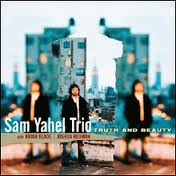 Two nights ago, I got to see one of Steely Dan‘s shows on their current “Shuffle Diplomacy” tour. The Dan did a great job blowing away The Beacon Theatre. But this 2,894-seat venue was not suited for the opening organ-saxophone-drums jazz trio. The Sam Yahel Trio, like Anath, needs to be closer to the audience for the audience to feel anything resembling what the performer is trying to get at.
In the traditional Musaf service on Shabbat morning, we envision the angels in God’s court asking, “Ayyeh mekom kevodo?” (“Where is the place of God’s kavod?”).
That word, kavod, is often translated as “glory,” but Gershom Scholem (scholar of Jewish mysticism) noted that kavod also is related to the word kaved (“heavy” or “weighty”). Kavod means “weight” or “substance.” The angels are asking where God is best expressed in the universe.
Artists have to ask themselves this question too. Where is their mekom kevodo–the place where they come into being? Where can an artist best express one’s self? When can an artist’s true worth and substance be best received?
I know that Anath and the Sam Yahel Trio are fantastic musicians, and I hope that they each can find their own mekom kevodo.
I’m welcoming all suggestions for locating kavod.