
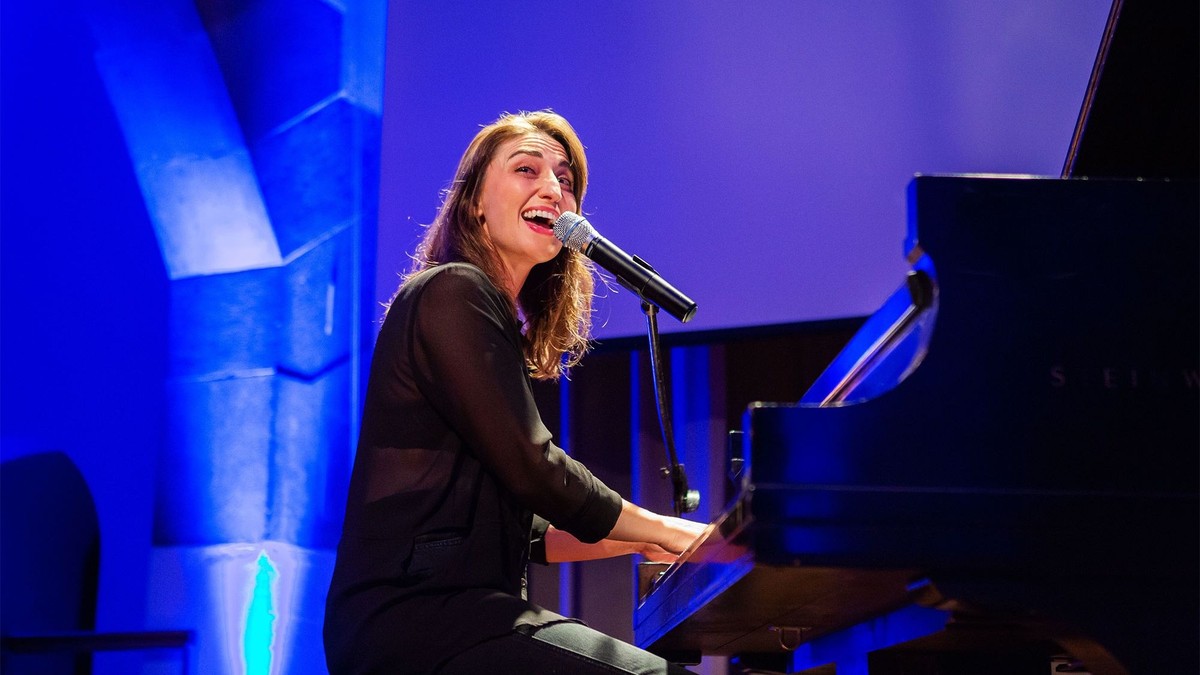
Sara Bareilles’ Kaleidoskope Heart: The Rainbow Hidden ‘Neath Our Skin
July 20, 2011 at 3:02 am, by Jonah Rank
 I admit that I’m a bit late on this. (What else is new?)
I <3 Kaleidoscope Heart, Sara Bareilles’ sophomore major label studio album.
The name of the album comes from a metaphor that appears in “Uncharted,” the first song she wrote for this CD: “Jump-start my kaleidoscope heart. / I love to watch the colors fade. / They may not make sense, / But they sure as hell made me.”
These words—submissive yet assertive—find their confused place amidst a song that Bareilles claims was the first full song she was able to write after the success of her major label debut Little Voice. “Uncharted” is the singer/songwriter’s confessional of “writer’s block,” that mixed-up confusion that results from you earning the identity of a “writer,” and then you either have nothing to say or no way to say it.
That writer’s block is, as Bareilles puts it, when you don’t know “how to get started,” and the road ahead is, at best, “uncharted.”
I truly love her metaphor of the kaleidoscope heart—a soul composed of a disorganized, mixture of “colors.”
 Each of these “colors” is another experience, another memory, another emotion, another identity.
Our souls—our hearts—are kaleidoscopes: the totalities of our lives, from birth to the present day.
You might have heard the rumor that I’m a rabbinical student. One of the things we talk about a lot in my rabbinical school is pastoral care: how we, as rabbis, can best interact with others in times of need, in times of joy, in times of sadness, and in all moments of life.
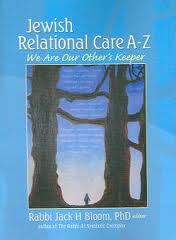
One book I’ve been reading a bunch is Jewish Relational Care A-Z: We Are Our Other’s Keeper, a collection of essays on pastoral care in the Jewish world (edited by Rabbi Jack H Bloom, who’s also got a Ph.D. in Clinical Psychology). Although the book is a collection of multiple approaches towards pastoral care, perhaps self-relations psychotherapy is the most stressed method of care in Bloom’s anthology.
In short, self-relations psychotherapy builds on the idea that we each have multiple selves. We know our selves at our best, and we know our selves at our worst. In one instance, we may identify as standing at one extreme border, and in another we realize that we are truly somewhere in the middle. We may be children, partners, spouses, parents, siblings, cousins, friends, enemies, students, teachers, workers, resters, and so much more. None of us contains only one self. We are all multiple selves.
The challenge then in recognizing our multiple selves is trying to see everybody—every embodiment of multiple selves—as created betzelem elohim (in the image of God), even when we think of God as One (not Multiple)!
But the truth is that we talk about God through all sorts of metaphors: Avinu Shebbashamayim (our Parent in Heaven), Malkenu (our Sovereign), Tzurenu (our Rock), Go’alenu (our Redeemer) and so much more.
I don’t know how the God I believe in would view God’s self, but I see God as multiple selves all part of the same One God—that same Adonai Echad (in the words of Deuteronomy 6:4).
God, at heart, is, like each of us, kaleidoscopic. In the opening song of Bareilles’ new CD (“Kaleidoscope Heart”), an a cappella choir of Sara Bareilleses sings, “I have hope / Inside is not a heart / But a kaleidoscope.”
Rabbi Bloom, a slew of psychotherapists, a slew of rabbis, and a slew of theologians would all be inclined to say that the persons we know (and the God in whom we would believe) are all multiple selves. We are not simply one red beating heart.
Like Sara Bareilles, each of us can admit that there are “All the colors of / The rainbow / Hidden ‘neath my skin.”
To me, the question is not whether we are kaleidoscope-like mixtures of the colors that stain us and paint us as we live and learn. As far as I’m concerned, we are divinely kaleidoscopic.
To me, the question is: Can we look at the kaleidoscopes inside us and appreciate the beauty of our many selves?
Can we accept, and celebrate, that our many selves are fashioned betzelem elohim?
FUN FACT: I met Rabbi Bloom about a year ago at a convention where I was selling his book. He’s a nice guy!